Tuesday, February 15, 2011

Ordinary People, Extraordinary Play

"Feelings are scary. And sometimes they're painful. And if you can't feel pain... you won't feel anything else either. You know what I'm saying?"
-Dr. Berger-


I wasn't sure what to expect.  I had a long day and lots of reasons to not go back to school on a Saturday night, but from the opening scene, I was hooked into this play.  I always enjoy seeing my students (even if they're not in my classes, they're part of the WeGo family) doing what they love.  Love for acting and being a part of the theater program was inspiring and evident throughout the play.

Ordinary People is a play that lives up to it's title. It is a play about an average American family dealing with issues ranging from the death of a younger brother, to alcoholism, to love.  I admired the honesty of the play:  it reminded me of how ordinary my life is too, but ordinary in a good way, in a way that makes me related to my friends, family, and others around me.  We can all get so hung up on how difficult our situations or life problems are and oftentimes neglect the fact that we're not the only ones dealing with issues.

The play also reminds us to feel.  Con and his mother suffer from "sweep it under the rug" syndrome.  They don't deal with their issues.  They're bottlers.  I can relate to that!  In fact, much of the play was easy to relate to, which in my eyes, made it a success on the high school stage.

Did anyone else see the play?  What did you think?  Let's hear your thoughts!

The End of a Dictatorships' Regime

It's official, Mubarak has stepped down!  What a moment for the history of the world.  Margaret Mead once said, "Never doubt that a small group of thoughtful, committed citizens can change the world; indeed, it's the only thing that ever does."  One person's actions, one group of people's solidarity:  that's what it took to bring down two dictatorial governments in the past month (Tunisia & Egypt).  Currently, revolutions have been sparked in Yemen, Bahrain, and Iran.  


When Shakespeare writes about Julius Caesar, he makes it very clear to the audience that Caesar's greatest flaw is his inability to set aside his own personal ambitions for the betterment of his people.  This kind of selfish rule is ultimately what convinces Brutus to join the conspiracy and do what he dreads - kill Caesar.  Caesar's rule can be foreseen by the conspirators:  they see a group of people ruled by a man whose priorities center on himself.  That, the conspirators know, will lead to a lot of problems for the Roman empire and they fear those problems enough to plan Caesar's assassination.


Keep an eye on world politics, everyone.  The lessons Shakespeare intends to bring our attention to are issues that are pertaining to our world right now!


Read more!  http://www.cnn.com/2011/WORLD/africa/
02/11/egypt.protests/index.html?hpt=T1 


Reflect:
1.  Do you support the protestors?  Are they doing the right thing? Do they have any other options?


2.  What freedom or liberty would you miss the most living in a society run by a dictator?  Can you imagine living in that situation?

Wednesday, February 2, 2011

Happy Snow Day!!! TWO DAYS!!

I don't know about you guys, but we had about 20 inches of snow out here in Naperville!  Yikes!  I'd love to hear how your snow days are going...don't forget to post/send me your pictures of Julius Caesar snowmen or other creative JC artwork! :-)

I must recommend that you all purchase the new Civil Wars album.  It was released yesterday and you can buy it on iTunes for just $7.99.  I'm loving it and listening now!  If you'd like me to burn you a copy, just let me know.  Here's a little song to give you a taste (they also sing "Poison & Wine" the song that we had for FriTunes last week).


See you all on Friday!! :) Check out Katie K's video that she sent!

Sunday, January 2, 2011

I wish I had Michael Jackson's ankles...

          If we were living in Neal Shusterman's fictional world of his latest novel Unwind, that might actually be possible. I could have the ankles of Michael Jackson, the critical ears of Simon Cowell, and the legs of a marathon runner.
          Connor, Risa, and Lev star as the central characters to the 2011 Abraham Lincoln Award Nominated novel Unwind.  The story is about these three "unwinds": kids between the ages of thirteen and eighteen who have been labeled as unworthy by their parents/guardians to be sent away to Harvest Camp where their entire bodies will be taken apart and given to others who need organ or body part donations.  For real.  And everyone in the novel seems perfectly okay with this, that is, except for the Unwinds.
          The novel is hauntingly similar to the ideas and thrills of The Hunger Games but with its own twists and turns.  The narration is interesting, compelling even.  With every chapter, the narrator changes.  That keeps the pages turning and the mystery boiling.  Connor is a rebellious yet likable character, Risa is spunky and Katniss-like, and Lev transforms from an irritating kid to an admirable young man.  These three characters are pushed together by fate as they all attempt, in one way or another, to escape their own unwinding.  The characters never stay in one place for a long time, which is great because it keeps the pace of the novel moving.
          There is certainly enough action to keep readers interested and genuine emotion experienced by the characters, yet the novel did not live up to the quality of Hunger Games for me.  Have any of your read it?  What are your thoughts?

Saturday, January 1, 2011

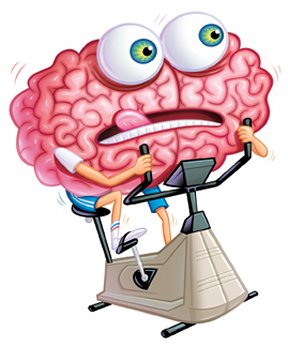
Is Improving Your Mental Fitness one of Your New Year's Resolutions?

Dear friends, students, and all others who read this blog,

Happy New Year, one and all!  I hope that you are all still enjoying this long, relaxing break time from school.  I'm eager to get back to the classroom and see all my shining (won't they be happy?) student faces on Monday :)   But before we get there, I'm sure you are taking some time today to reflect on the successes and failures of 2010 and in that process, are making some positive resolutions for the year 2011.  May I suggest (or insist, rather) that your resolution for 2011 involve increasing the amount of READING that you do on a daily basis??

I know, I know.  Predictable.  An English teacher is encouraging me to read more often.  I've told you about how much I love reading, how it transports me to places and times that I've never imagined.  About how it makes me wrestle with ideas and beliefs that I can't quite figure out in my own life.  Reading IS awesome.  If you don't believe me, take a hint from this article at About.com.  Reading is all about MENTAL FITNESS.  A strong, healthy brain that will get you to, through, and beyond college.  Check it, yo:


Top 10 Ideas for New Reading Material for Brain Health and Mental Fitness
By Mark Stibich, Ph.D., About.com Guide

Reading is a great pastime and your brain will thank you for the challenge of learning something new. By learning novel concepts and ideas in reading, your brain will start to make connections and see these concepts in everyday life. For example, read a book on architecture and you will look at buildings differently.

1. Biography
Biography can give a whole new perspective not only on the historical events that encompass the subject's life, but also on how people think and react to the events around them. Too often we hear about famous people through the media and forget that behind all the glamour and politics there are real people with fears, ambitions, hopes and dreams. Choose someone who interests you and read a biography -- you'll never think of them the same way again.

2. History
History is utterly fascinating. Choose an era that appeals to you and dive in. Your brain will get a work out remembering events, people and times. You will start to see links. Some of the most interesting history books trace a single idea, product or trend. Learn how salt shaped nations, how disease and illness ended empires, and how cultures interrelate.

3. Foreign Authors
Reading foreign authors can give insight into other cultures and places. When books are written for other people and languages, you can learn more.

4. Poetry
Poetry is one of the most underrated types of reading. Poems really challenge the brain by engaging in symbols, allegory and unclear meanings. Pick up an anthology of poems and choose one poem per day. Spend some time on the poem, read it out loud, and let your brain wrap around the words, meanings and intentions of the poet.

5. Classics
The classics are fantastic, some of the best writing in the world. Pick up Dickens and get a double treat -- insight into historical England and depth of character. The classics may feel dense at first, but after the first few pages, you'll adapt to the writing and be drawn into a different time and way of speaking. Work your brain out by reading older language and longer sentences.

6. Science
Science books are fantastic. There are lots of science journalists putting out books that explain concepts and ideas well. Science is really a story about a phenomena. Pick a topic -- astronomy, physics, chemistry -- and find a book that looks good. You'll soon be an expert.

7. How Tos
Learn how to build a boat, even if you aren't planning on making one. Find out how to cook meals you'll never prepare. Get the scoop on how to survive in the wilderness. There are hundreds of fun-to-read and interesting how to books out there. Just pick one and learn everything you can. Your brain will be challenged by visualizing the project, imagining how you would do it and all the steps involved in planning it.

8. Art, Fashion, and Design
These books are often the most expensive, but the library has beautiful art books from different periods. Browse through the wonderful pictures in these books. Train your brain to understand different themes, images, and trends in architecture or fashion (for example). Soon you'll see the influences in the buildings around you or on the clothes people wear. Teach your brain a new way to look at things.

9. Travel
Travel books are often funny, informative and detailed. Check out a few about places that interest you and read up on them. Plan a trip that you may never take. Plan out all the details -- hotel, restaurants, sites. Make detailed itineraries and budgets. Your brain will be challenged by scheduling, prices and the details of culture and history.

10. Religion and Culture
We hear about religions and places on the news and have opinions of them, but know little. Pick up a book on Islam and develop an understanding of one of the world's largest religions. Or try Buddhist, Judaism or Catholicism. Learn about the cultures of Central America, East Africa or Southeast Asia. Find out details about life in India or China.


Take the advice from these experts if you don't trust me already!  Make a commitment to yourself to MAKE YOUR BRAIN STRONGER EVERY DAY BY READING!!!  You will thank me because school will get easier, you will become a better writer, and your ACT/PSAE testing scores as a Junior will be much higher than what you will get without the practice of reading.  Get to it!

Thursday, December 30, 2010

Top English 2 Blogs to check out!

Hey all!

I spent some time today re-reading through some of your blogs and I'd like to highlight a few that are doing an awesome job.  Keep up the good work everyone, and take a look at these blogs for inspiration and examples of really good writing, detailed explanation, and voice!

CHECK OUT YOUR AWESOME CLASSMATES!!

Thirteen Reasons Why Jay Asher's Book Failed to Impress Me

As your English teacher, it's really hard for me to write a negative book review.  As a person (which, surprise!  your teachers are people too!) I tend to be very critical of what I read and quite a bit of a book snob.  So in this review, I have to balance the two.  I want you all to learn that it's okay to not like a book, but that you must have critical reasons to back up that opinion.  It's true that I want you all to be reading, but I need to set an authentic example for you all.  Authentically - I didn't like this book.  If I weren't reading it to review it on the blog, honestly, I probably wouldn't have finished it.  So let me lead by example and tell you exactly why I didn't enjoy Jay Asher's new book.  

Thirteen Reasons Why Jay Asher's Book Failed to Impress Me:
#1:  The book is about suicide.
Suicide books are immediately depressing and I don't like feeling uncomfortable throughout the entire process of reading a novel.  Losing a student, family member, or anyone to suicide is probably one of my greatest fears, and I'm not comfortable reading through a story that is one long suicide note.  The basic premise of the story is a young man who receives thirteen cassette tapes that a young lady named Hannah recorded before taking her own life.  The entire novel is the main character listening to the tapes and hearing her reasons for committing suicide.  It gives me the creeps.  

#2:  The book has very little interesting language.
I'm a poet at heart and love to be taken away into the depths of my imagination with language.  The narration in the story was boring and basic.  Easy to read, but no imagination!

#3:  The narration is confusing
The narration goes back and forth between the tape and the main character's reactions to the tape. Sometimes he is thinking about himself, sometimes about the tape, and overall it creates a very distracted and confusing effect.  Maybe you'll like it, but I wanted to just hear the tapes without the main character's thoughts getting in the way.  Maybe the author could have alternated back and forth, but the mixing of the voices was irritating.

#4:  The characters are one dimensional
I love characters that I can really imagine, characters that I can relate to and remember from my own life experience.  The characters here?  Superficial and flat.  

#5:  There is no real emotion experienced
The only thing I remember feeling throughout the course of this novel is depressed.  Not even for a good reason! 

#6:  The climax is disappointing
The whole story we are waiting to figure out why the main character has been chosen to listen to the tapes.  I won't ruin it for you, but I will tell you not to get your hopes up.

#7:  The entire book takes place in 24 hours
Now this has been done before and can be an interesting way to tell a story, but for me, it just dragged the story out even more.  254 pages to describe a 24 hour period felt like an unrealistic way to tell the story.  I read 100 pages in an hour just waiting and waiting to figure out what was going to happen.  Like I said in my earlier point, when I finally figured out what I was waiting to find out, I was disappointed.

#8:  Some of the chapters seem unnecessary
...and unbelievable.  I don't totally believe that each of these stories really happened to the narrator in the time span that she claims.  It's really convenient that they all overlap into one another.  Instead of believing the story, I kept imagining the author contriving the stories to make them fit - it just didn't feel natural.

#9:  There is no thematic development
The great things about To Kill a Mockingbird and Julius Caesar and all of those other "boring" books we make you read in English is that they are timeless.  They bring up issues and situations (themes, essentially) that resonate with the readers no matter what stage in life or place in the world they may be.  Those books make you question things that you previously believed and have the potential to shape your outlook on life.  This book?  Nada.  It was a story that I will soon forget.  

#10:  The cover deceived me
After looking at the cover and reading the synopsis, I invented a way cooler story in my head than was actually contained in the book.  I don't like to be disappointed like that!

#11:  Too. Much. High. School. Drama
Now I know.  I graduated high school a long time ago.  I'm a dinosaur.  Normally, however, I can handle reading Young Adult books that deal with high school issues and be entertained, compelled, and really care about the characters.  But holy cow.  The parties, and boys, and girls, and popular kids, and football team being jerks to the new girl in town - it was just too much to handle.  Not to mention, that kind of drama doesn't actually happen in high school.  It's only in the movies, which leads me to my next point:  

#12:  I feel like I've read this before...
Every other chapter or so, I felt like I had heard the same scenario before.  In a movie, in another book, on TV...Where's the originality, Asher??

#13:  I just finished The Book Thief.  
Seriously...there's no comparison.  It's hard to read another book after you've just finished the best book of your life.  Sorry 13 Reasons...you just didn't measure up!


So there you have it folks.  I challenge you to pick it up and prove me wrong!  More importantly, I challenge you to read everything with a critical eye.

Happy reading,
Miss Cordes